
Indian Institute of Technology (BHU) Varanasi – Complete Guide: Courses, Admission, Rankings, Campus Life & More
The Indian Institute of Technology (BHU) Varanasi, commonly known as IIT (BHU), is one of India’s oldest and most prestigious engineering institutions. Located in the historic city of Varanasi in Uttar Pradesh, the institute operates inside the sprawling campus of Banaras Hindu University.
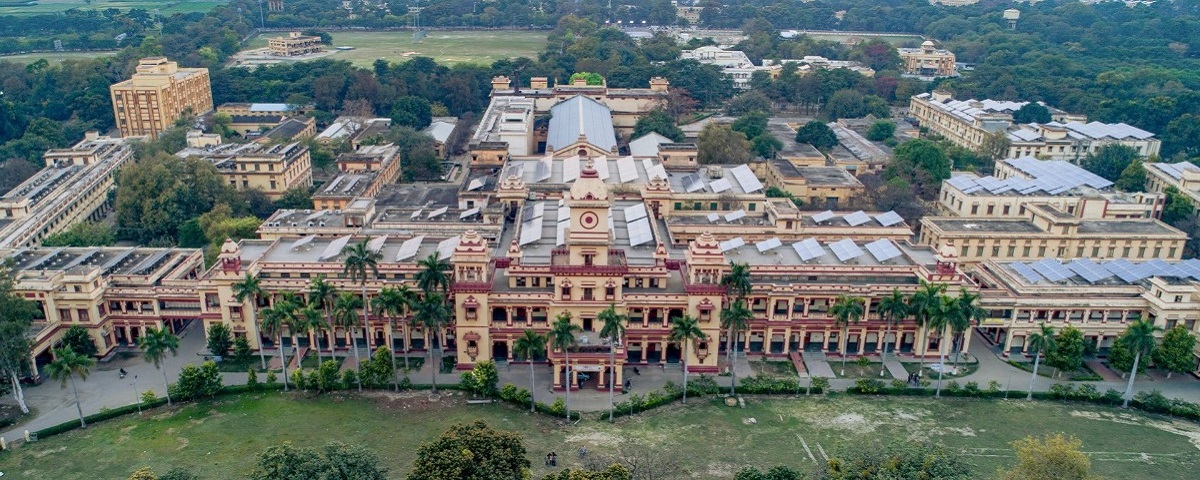
The Indian Institute of Technology (BHU) Varanasi, commonly known as IIT (BHU), is one of India’s oldest and most prestigious engineering institutions. Located in the historic city of Varanasi in Uttar Pradesh, the institute operates inside the sprawling campus of Banaras Hindu University.
Founded in 1919, the institute has a rich legacy of more than a century in engineering education and research. Over the years, it evolved from a traditional engineering college into a full-fledged Indian Institute of Technology (IIT) in 2012, becoming part of India’s elite network of IITs.
Today, IIT (BHU) Varanasi is widely recognized for its strong placements, advanced research facilities, highly competitive admissions, and vibrant campus culture, making it one of the most respected technical institutions in India.
History of IIT (BHU) Varanasi
The origins of IIT (BHU) are closely linked with the establishment of Banaras Hindu University, one of India’s largest residential universities. The institute was originally established as Banaras Engineering College (BENCO) in 1919 with the vision of providing advanced engineering education to Indian students.
The institute gradually expanded with the creation of several specialized colleges:
1923: College of Mining and Metallurgy (MINMET)
1932: College of Technology (TECHNO)
1968: These institutions merged to form the Institute of Technology (IT-BHU)
For decades, IT-BHU functioned as the engineering faculty of Banaras Hindu University. However, due to its academic excellence and growing reputation, the Government of India decided to convert it into an IIT.
The transition was completed in 2012 when the Institutes of Technology (Amendment) Act officially granted the institute IIT status.
In 2019–2020, the institute celebrated its centenary year, marking 100 years of engineering education and innovation.
Organisation and Administration Governance Structure
Like other IITs, IIT (BHU) follows a structured governance model.
The hierarchy typically includes:
President of India – Visitor of all IITs
IIT Council – Overall policy authority
Board of Governors – Governing body of the institute
Director – Chief academic and administrative head
Deans and Department Heads – Responsible for academics and operations
However, IIT (BHU) has a unique arrangement where representatives from Banaras Hindu University also participate in the governance structure, maintaining strong academic collaboration between the two institutions.
The current director of IIT (BHU) is Amit Patra, while the chairman of the board is Kota Harinarayana, a renowned aerospace scientist.
Departments and Schools
IIT (BHU) Varanasi currently has a large academic structure consisting of engineering departments, science departments, interdisciplinary schools, and humanities programs.
Engineering Departments
Some of the major engineering departments include:
Computer Science and Engineering
Electrical Engineering
Mechanical Engineering
Civil Engineering
Chemical Engineering
Electronics Engineering
Mining Engineering
Metallurgical Engineering
Ceramic Engineering
Pharmaceutical Engineering & Technology
Science Departments
The institute also offers strong research programs in basic sciences, including:
Physics
Chemistry
Mathematical Sciences
Interdisciplinary Schools
IIT (BHU) has introduced several interdisciplinary schools such as:
Biomedical Engineering
Materials Science and Technology
Biochemical Engineering
Decision Sciences and Engineering
Humanities and Social Sciences
The Department of Humanistic Studies offers courses in:
Sociology
Philosophy
Linguistics
History
English
These programs help engineering students develop communication, analytical thinking, and leadership skills.
Academics at IIT (BHU) Undergraduate Programs
The institute offers four-year Bachelor of Technology (BTech) programs across various engineering disciplines.
It also offers five-year Integrated Dual Degree (IDD) programs, allowing students to earn both:
BTech
MTech
These integrated programs combine undergraduate and postgraduate education in a streamlined format.
Postgraduate Programs
IIT (BHU) provides several postgraduate programs, including:
Master of Technology (MTech)
Doctor of Philosophy (PhD)
These programs focus heavily on research and innovation and attract students from across India.
Admission Process
Admission to IIT (BHU) is extremely competitive.
Undergraduate Admission
Students must qualify through:
Joint Entrance Examination – Advanced (JEE Advanced)
Candidates first take Joint Entrance Examination – Main, and only top performers are eligible to appear for JEE Advanced.
Postgraduate Admission
Admissions are based on national-level exams such as:
Graduate Aptitude Test in Engineering (GATE)
Graduate Pharmacy Aptitude Test (GPAT)
PhD admissions are conducted through written tests and interviews by the institute.
Rankings
IIT (BHU) consistently ranks among India’s top engineering institutes.
Recent rankings include:
QS World University Rankings 2026: Top 600 globally
QS Asia Rankings: Top 300 universities in Asia
NIRF Engineering Ranking: Top 10 engineering institutes in India
These rankings reflect the institute’s strong academic performance, research output, and industry reputation.
Library Facilities
The Shreenivas Deshpande Library is the main library of IIT (BHU). It serves as a central knowledge hub for students and researchers.
Key features include:
Over 1.4 lakh books in engineering, science, and humanities
Access to 10,000+ international journals
Thousands of e-books and research databases
Digital repositories for student theses and research papers
The library also provides Wi-Fi-enabled study spaces and seating for more than 600 students.
Students also have access to the central library of Banaras Hindu University, which greatly expands academic resources.
Student Life at IIT (BHU)
Life at IIT (BHU) is not limited to academics. The institute offers a vibrant campus culture with numerous clubs, societies, and festivals.
Gymkhana
The IIT BHU Gymkhana is the central body responsible for all student activities. It manages several councils that organize competitions, workshops, and cultural events.
These councils include:
Games and Sports Council
Cultural Council
Science and Technology Council
Film and Media Council
Social Service Council
Festivals at IIT (BHU)
The institute hosts several major student-organized festivals every year.
Technex
Technex is the annual techno-management festival and is considered one of the oldest technology festivals in Asia.
Kashiyatra
Kashiyatra is the annual cultural festival, featuring music, dance, fashion shows, and celebrity performances.
Spardha
Spardha is the annual sports festival, attracting athletes from universities across India.
FMC Weekend
This event celebrates filmmaking, photography, and media creativity.
Institute Magazine
The institute publishes a newsletter called IIT BHU Connect. This bi-annual magazine highlights:
Research developments
Campus events
Student achievements
Institutional initiatives
The publication is managed by a student editorial team and helps showcase the institute’s activities globally.
Entrepreneurship and Innovation – MCIIE
The Malaviya Centre for Innovation, Incubation and Entrepreneurship (MCIIE) promotes startups and innovation among students.
Established in 2008, the centre provides:
Startup incubation support
Business mentorship
Entrepreneurship training
Networking opportunities with investors
Several student startups have emerged from this incubation program.
Alumni Network
IIT (BHU) has a strong global alumni community working in technology, business, research, and government sectors.
Alumni Publications
The alumni community publishes magazines such as:
Alma Communiqué
IIT (BHU) Chronicle